[email protected] Average response time ≤ 2 hours Guangzhou, Guangdong, China
  • 🇬🇧 English
  • 🇪🇸 Español
  • 🇫🇷 Français
  • 🇸🇦 العربية
  • 🇷🇺 Русский
  • 🇵🇹 Português
  • 🇹🇷 Türkçe
0%

Choosing a 3D adjustable cabinet hinge is less about appearance than about how reliably a door moves, closes, and stays aligned. A few millimeters matter: a tall pantry door can rub against a neighboring panel, while a small adjustment may restore an even gap. Before comparing models, check the door’s thickness, weight, overlay, and cabinet construction. These details narrow the options quickly.

For this introduction, the named expert voice below is a clearly labeled editorial composite, not a real person or a verified quotation. Its practical rule is: “Choose the hinge for the door you have, then confirm that its adjustments can correct the gaps you see.” That is the heart of these five tips. Check the hinge’s adjustment range, load guidance, opening angle, mounting pattern, and closing action. Then compare the manufacturer’s installation instructions with your cabinet dimensions. A soft-close feature may feel satisfying, but it cannot compensate for an incompatible hinge or poorly placed mounting plate. Small details matter. So does patience. Even careful measurements can miss an old cabinet’s uneven face frame; measure twice, and test the first hinge before installing the rest.
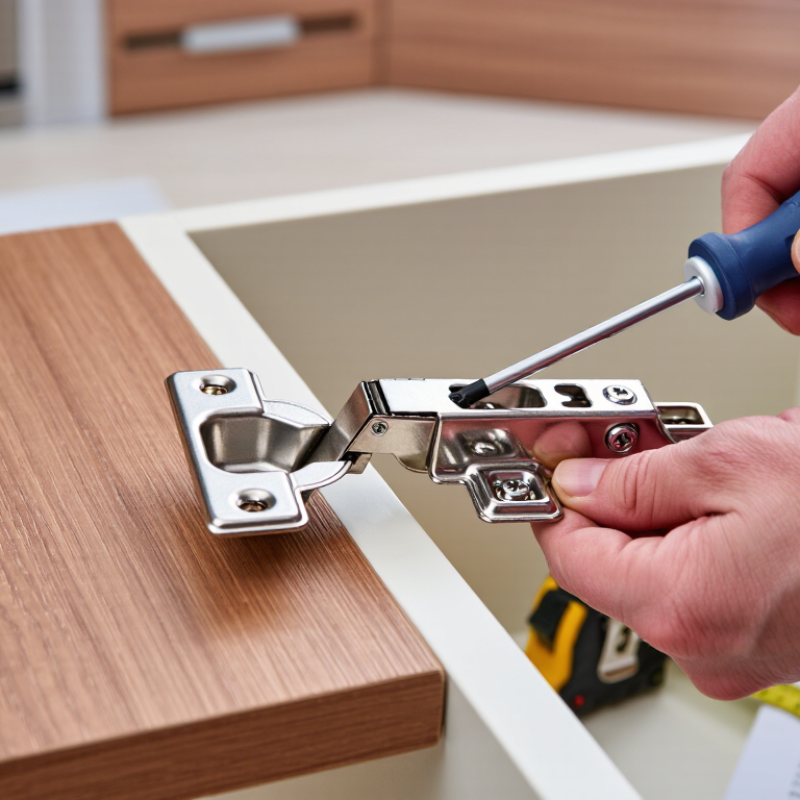
5 Tips for Choosing a 3D Adjustable Cabinet Hinge

Identify the 3 Adjustment Axes: Height, Side, and Depth

A 3D adjustable cabinet hinge moves the door along three separate axes. Height raises or lowers the door, helping align its top edge with neighboring doors. Side adjustment shifts it left or right, creating an even gap between fronts. Depth moves the door closer to or farther from the cabinet, which can correct a proud or recessed position. Make small turns, then close the door and inspect it from eye level. Tiny movements count.

These adjustments matter in real kitchens, where cabinet doors may settle or reveal uneven gaps over time. Houzz’s 2024 U.S. Kitchen Trends Study reported that 76% of renovating homeowners replaced all their cabinets. For projects involving existing cabinetry, careful hinge adjustment can help preserve a consistent appearance without replacing the door. The NKBA’s 2024 Kitchen Trends Report collected responses from more than 630 industry professionals, reflecting the attention designers give to practical kitchen performance. Check the hinge’s adjustment diagram, since screw direction and range vary by model. Not every door behaves alike. Adjust height first, then side, then depth; recheck the reveal after each change. A door can look straight when open and still sit unevenly when closed. That is easy to miss.

Check Compatibility with the Common 35 mm Hinge Cup

A 35 mm hinge cup is common, but the diameter alone cannot confirm a match. Measure the cup across its widest point, then check its depth and distance from the door edge. A ruler can help, though calipers give a more reliable reading. Small differences matter. A replacement hinge may fit the hole yet sit poorly against the door.

Check the hinge maker’s specification for the required cup depth, door thickness, and drilling position. Compare the existing screw holes and mounting plate too; these can vary even when both hinges use a 35 mm cup. Do not guess. If the old hinge is available, take it to the cabinet or compare its dimensions with the product drawing. It is a simple check, and it can prevent new holes or a door that will not close evenly.

Three-way adjustment helps correct side-to-side, height, and depth alignment after installation. It cannot fix a cup that is too shallow or a plate that does not suit the cabinet. I would treat “35 mm” as a starting point, not a guarantee. That distinction is easy to overlook when replacing just one hinge. If the measurements are unclear, pause and verify them before ordering.

5 Tips for Choosing a 3D Adjustable Cabinet Hinge

Check Compatibility with the Common 35 mm Hinge Cup

The 35 mm cup is widely used for concealed cabinet hinges. Other nominal cup diameters, such as 26 mm and 40 mm, are also available. Before choosing a hinge, confirm the existing cup diameter and depth, door thickness, overlay, and mounting-plate requirements against the hinge specifications.

Choose an Opening Angle: Common Models Range from 95° to 110°

When comparing 3D adjustable cabinet hinges, treat opening angle as a clearance requirement, not a feature to choose by number alone. Common models open to about 95°–110°, but the usable angle depends on the cabinet and nearby obstacles. A 95° hinge may suit a narrow kitchen run where the door could strike a wall. Small margins matter.

For a 110° option, check the door’s path beside handles, appliances, and neighboring fronts. A wider swing can make shelves easier to reach, especially when a drawer or pull-out sits behind the door. Yet it may cause the door edge to project into a walkway or hit a projecting handle.
Measure from the hinge pivot to the closest obstruction. If the layout is tight, test the full arc with a cardboard door template.

Confirm that the stated angle applies to your hinge configuration; overlay, door thickness, and mounting position can change clearance. Also check whether the hinge has an opening stop or requires a separate limiter. Specifications are not always presented consistently, so ask for a dimensioned drawing when the angle is critical.
The larger number looks attractive on paper. Not automatically. A dry fit can reveal awkward contact that a catalog sketch misses.

Compare Load and Durability Test Data with EN 15570:2008

A 3D adjustable cabinet hinge should be judged by more than its stated load rating. Compare test reports that reference EN 15570:2008, and check which hinge type, mounting arrangement, and test conditions were used. A number without its setup can mislead. Look for durability results, including the number of opening-and-closing cycles and the criteria used to assess wear or failure. Check whether the report identifies the tested sample and date.

Tips: Compare like with like. Ask for the test configuration, sample count, cycle results, and any recorded loosening or deformation. Confirm that the tested hinge matches the model and mounting method you plan to use. Small detail. Big difference.

Also consider the cabinet door itself. A heavy, wide door or a soft mounting surface can behave differently from a controlled test sample. EN 15570:2008 results help compare performance, but they do not guarantee identical service life in every installation. A lab result is a starting point, not a promise; that distinction is easy to overlook. For a practical choice, match the reported test conditions to your door dimensions, expected use, and cabinet construction, then allow a safety margin rather than selecting exactly at the stated limit.

Match Hinge Type to Cabinet Frame and Door Overlay

A 3D adjustable hinge works best when its mounting style matches the cabinet frame. On a frameless cabinet, the hinge arm attaches to the cabinet side. A face-frame cabinet has a front rail around the opening, so it may need a frame-specific arm or mounting plate. Check the frame thickness and clearance before buying; a standard arm can hit the frame even when the screw holes look close. Measure twice.

Then match the hinge to the door overlay. A full-overlay door covers most of the cabinet side or face frame. A partial-overlay setup lets neighboring doors share a frame or partition. An inset door sits inside the opening, so it needs an inset-compatible hinge. With the door closed, measure how much of the frame or side panel it covers rather than guessing from the door’s appearance. 3D adjustment can fine-tune height, side-to-side position, and depth, but the adjustment range varies. It is easy to assume those adjustments can rescue a mismatch; usually they cannot. Make small changes, then check the reveal around the door again.

FAQS

Does a 35 mm hinge cup guarantee a replacement hinge will fit?

No. Measure the cup’s widest point, depth, and distance from the door edge. Small differences matter.

What should I measure before ordering a hinge?

Check cup depth, door thickness, drilling position, screw holes, and mounting plate. Calipers can provide a more reliable reading than a ruler.

Can an old hinge help confirm compatibility?

Yes. Compare its dimensions with the new hinge’s product drawing, or bring it along for comparison. It is a simple check.

Will three-way adjustment fix any hinge mismatch?

No. It can fine-tune height, side-to-side position, and depth, but it cannot correct an unsuitable cup or mounting plate.

How do I choose a hinge for a frameless cabinet?

The hinge arm usually attaches to the cabinet side. Check its clearance and mounting style before buying.

What should I check on a face-frame cabinet?

Measure the frame thickness and available clearance. A standard hinge arm may hit the front rail, even if the screw holes seem close.

How can I identify the door overlay?

Close the door and measure how much of the frame or cabinet side it covers. Full overlay covers most of it; partial overlay leaves more visible.

Can an inset door use any adjustable hinge?

No. It needs an inset-compatible hinge. I used to assume adjustment could rescue a mismatch, but usually it cannot. Make small changes, then check the reveal.

Conclusion

Choosing the right 3D adjustable cabinet hinge starts with understanding its three adjustment axes: height, side-to-side position, and depth. These controls make it easier to align a door evenly and fine-tune its fit after installation. Check that the hinge is compatible with the cabinet door’s 35 mm hinge cup, and select an opening angle suited to the space and access you need; common options typically range from 95° to 110°.

Next, compare load capacity and durability information, including test data assessed against EN 15570:2008, to help determine whether a hinge is suitable for the door’s weight and expected use. Finally, match the hinge design to the cabinet construction. Frame style and door overlay affect how the door sits and how the hinge attaches, so considering these details can help you achieve reliable operation, consistent alignment, and a clean finished appearance.

Charlotte

Charlotte

Charlotte is a highly skilled marketing professional with a deep understanding of the company’s products, services, and customer needs. Through years of experience in market research, content strategy, and professional communication, she transforms complex product information into clear, practical,......