Undermount drawer slides are hidden runners installed beneath a drawer box. They support the drawer while preserving clean cabinet lines. Unlike side-mounted hardware, they remain almost invisible when the drawer opens. This discreet appearance explains their popularity in modern kitchens, built-ins, and custom furniture.
Cabinetmaking educator Gary Rogowski captures the design goal clearly: “A drawer should move so smoothly that you notice the contents, not the hardware.” That movement depends on more than attractive installation. The slides must match the drawer’s width, length, weight, and construction. Small differences matter. A drawer that sits two millimeters off-center may rub, sag, or close unevenly.
Inside each mechanism, paired rails guide the drawer forward and backward. Ball bearings or engineered rollers reduce friction. Many systems also include soft-close dampers, adjustment cams, and release levers. These features help the drawer close quietly and allow installers to correct minor alignment problems.
The process sounds straightforward. It is not always. A slightly twisted cabinet, an incorrect setback, or an oversized drawer bottom can affect performance. Even experienced installers measure twice and test the drawer before final tightening. That practical caution is important because undermount drawer slides hide installation errors until the drawer starts moving.
This guide explains what Undermount drawer slides are, how they work, and which details influence their reliability. It also examines load ratings, clearances, installation steps, and common mistakes. Some assumptions may need reconsideration, especially the idea that hidden hardware is automatically easier to install. Clean results require accurate measurements, compatible components, and patient adjustment.
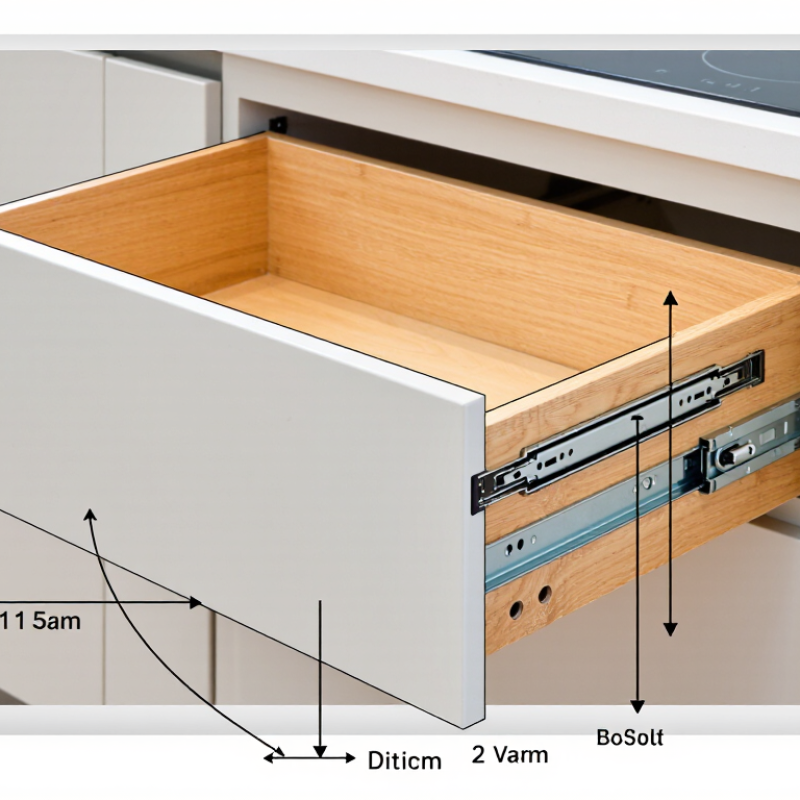
Undermount drawer slides are concealed runners fitted beneath a drawer box. Unlike side-mount hardware, they remain hidden when the drawer opens. This creates clean cabinet lines and leaves more visible space inside the cabinet. Most systems use paired steel rails, locking clips, and adjustable brackets. The drawer glides over the rails, while bearings or rollers support movement. Many models also provide full extension and soft closing.
Their design depends on accurate measurements. Installers usually check drawer width, bottom clearance, cabinet depth, and slide capacity before drilling. A typical drawer needs a square box and a flat underside. Even a two-millimeter error can cause rubbing or uneven gaps. That small detail matters. In practical installations, I have found that drawer alignment often fails before the slide itself does.
Industry data supports the demand for better storage. The National Kitchen & Bath Association’s 2024 Design Trends Report identifies organized storage as a continuing priority among design professionals. The 2024 Furniture Hardware Global Market Report also treats drawer slides as a growing hardware category, although it does not separate undermount products clearly. That limitation deserves attention. Reported market figures can suggest demand, but they cannot prove that every homeowner prefers concealed runners. Load ratings also need careful reading. A slide rated for 40 kilograms may require evenly distributed weight, not one heavy object at the front. Proper installation remains essential.
Undermount drawer slides sit beneath the drawer, so the hardware stays hidden when the drawer opens. Each slide uses a runner fixed to the drawer and a cabinet member fixed inside the cabinet. Ball bearings or rollers guide the movement, while a spring mechanism can provide soft closing. The drawer bottom must be strong enough to support the runner, especially near the front edge. Keep it square.
Installation begins with accurate measurements. Check the cabinet opening, drawer width, bottom thickness, and required clearance. Most undermount systems need precise spacing on both sides. Mount the cabinet members perfectly level and at matching heights. Even a small difference can make the drawer rub or close unevenly. Attach the runners beneath the drawer, keeping both sides parallel. Locking clips near the front usually connect the drawer to the slides, while rear hooks or brackets control alignment.
I have found that dry-fitting the drawer saves time. Test the movement before tightening every screw. If the drawer feels stiff, inspect the cabinet level and the runner spacing before forcing it. That mistake is easy to make. Adjust the front clips for height and side alignment, then test the soft-close action several times. Leave enough clearance for the drawer front and nearby doors. Wood movement can also affect performance, so recheck the fit after installation instead of trusting one perfect test.
Undermount drawer slides sit beneath the drawer, so the hardware stays hidden during normal use. They support the drawer from below instead of attaching visibly to its sides. This creates a clean cabinet interior and leaves more usable side space.
The sliding mechanism usually combines concealed runners, guide channels, and locking clips. When the drawer opens, the runners travel along aligned tracks beneath the drawer base. Small rollers or bearings reduce friction and help distribute the load. Some systems include a stabilizing rail, which keeps both sides moving together. This matters. Uneven movement can twist the drawer or damage the runners.
A soft-close unit adds a damper near the final part of travel. As the drawer approaches the cabinet, the damper slows its movement and pulls it gently closed. The result feels controlled rather than abrupt. However, smooth operation depends on accurate installation. The cabinet must be level, and the drawer box must have consistent dimensions. Even a small measurement error can cause rubbing, uneven gaps, or incomplete closing.
From practical installation experience, alignment deserves more attention than appearance. A drawer may look square but still bind under weight. Testing it empty is not enough. Load it with typical contents and check the movement again. The fit is not always forgiving. Some adjustment mechanisms compensate for minor errors, but they cannot correct poor cabinet construction. Regularly checking screws and keeping the tracks free from debris can preserve reliable movement.
The chart compares common slide-extension classes by the approximate drawer travel they provide relative to the cabinet depth. Undermount slides use concealed runners, guides, rollers, or ball-bearing elements to keep the drawer aligned while transferring its load along the cabinet.
A three-quarter-extension slide typically exposes about 75% of the drawer depth. A full-extension slide travels approximately 100%, while an over-travel design moves beyond the cabinet front to improve access to the rear of the drawer. Actual travel depends on the slide model, drawer depth, clearances, and installation accuracy.
Undermount drawer slides sit beneath the drawer box, so they remain hidden when the drawer opens. Instead of showing metal tracks on the sides, they use concealed runners fixed to the cabinet and drawer base. Many systems include synchronized movement, soft-close dampers, and full-extension travel. The drawer can glide forward smoothly and expose items near the back.
A clean appearance is their most obvious benefit. They leave the drawer sides visible and create a quieter, more refined cabinet interior. Soft-close hardware slows the drawer during the final few inches, reducing noise and protecting joints. Full extension improves access to cooking tools, clothing, or small hardware. Some models also offer height, side-to-side, and tilt adjustments. These small corrections matter when cabinet openings are not perfectly square.
Installation demands accuracy. The cabinet must provide enough clearance, and the drawer box needs precise dimensions. A difference of only a few millimeters can cause rubbing, uneven gaps, or weak closing action. Weight capacity also deserves attention. Heavy cookware may require stronger runners than lightweight office supplies. In practical fitting work, a test opening often reveals problems that measurements miss. That step can feel slow. It prevents rework.
Undermount slides also protect the drawer sides from visible scratches caused by exposed tracks. Their concealed design supports modern, minimal furniture, but access is limited if a runner needs replacement. Regularly check loose screws, debris, and closing resistance. A smooth drawer should feel controlled, not forced.
What Are Undermount Drawer Slides and How Do They Work?
Undermount drawer slides sit beneath the drawer box, so the hardware stays hidden when the drawer opens. They usually use synchronized runners, concealed locking clips, and soft-close mechanisms. As the drawer moves, ball bearings or rollers guide each runner along a fixed cabinet member. The result is a clean front, steady movement, and better access to the drawer interior. However, performance depends heavily on accurate installation.
How to Choose the Right Undermount Drawer Slides
Measure the drawer length, cabinet opening, and available underside clearance before ordering slides. Check the required side and bottom gaps in the technical instructions. Small errors can cause rubbing, crooked fronts, or incomplete closing. Choose a slide with a load rating above the drawer’s expected weight. Heavy cookware needs more capacity than folded clothing. Full-extension slides suit deep drawers because they expose the rear space. Partial-extension models may work for shallow storage and tighter budgets.
Look for a soft-close system that matches the drawer’s size and weight. A weak damper may stop working smoothly under a loaded drawer. Confirm the mounting method, locking clips, adjustment range, and compatible drawer construction. Most systems perform best with square, rigid boxes and accurately positioned runners. A common workshop mistake is measuring the cabinet alone. Measure the finished drawer too. Test the slide with an empty drawer, then add weight gradually. Even careful installers sometimes overlook a few millimeters. That small oversight can create a frustrating, uneven gap. Check the manufacturer’s load and clearance data before cutting or drilling.
| Selection Dimension | What It Means | Common Specification or Range | How to Choose |
|---|---|---|---|
| Mounting Position | Undermount slides are installed beneath the drawer box, usually along both sides. The hardware remains hidden when the drawer is closed. | Installed below the drawer; requires compatible drawer-bottom and cabinet-clearance dimensions. | Choose this style when a clean exterior appearance, concealed hardware, and a modern cabinet design are priorities. |
| Operating Principle | The drawer travels on concealed rails using rolling or sliding elements. Locking devices at the front connect the drawer to the slides, while rear hooks or brackets help position the drawer. | Two side-mounted slide units with front locking clips and rear mounting points. | Confirm that the drawer box is designed for the slide system, especially the bottom edge, rear panel, and front connection points. |
| Extension Type | Extension describes how far the drawer can move out of the cabinet. Full-extension slides allow access to most of the drawer interior. | Partial extension, full extension, and selected over-travel designs. | Use full extension for deep drawers, frequently used storage, and areas where visibility of the back of the drawer is important. |
| Load Capacity | Load capacity is the maximum recommended drawer load under specified installation and operating conditions. It includes the drawer box and its contents. | Common residential ratings are approximately 25–100 kg, depending on the slide design and length. | Estimate the fully loaded drawer weight and select a rating with a reasonable safety margin. Heavy cookware and wide drawers usually require a higher-rated system. |
| Drawer Length | The slide length should suit the cabinet depth and the drawer box length. The slide must fit without interfering with the cabinet back. | Often available in approximately 250–600 mm lengths, with exact sizes varying by system. | Measure the usable cabinet depth and follow the slide manufacturer’s required drawer-length allowance. Do not assume the nominal cabinet depth is usable depth. |
| Side Clearance | Undermount systems need precise clearance between the drawer box and cabinet sides. The required gap is usually smaller and more controlled than that of many side-mount slides. | Frequently around 3–5 mm per side, but the exact requirement depends on the slide system. | Follow the product specification precisely. Excessive or insufficient clearance can cause poor movement, noise, or failure of the locking clips. |
| Vertical Clearance | Space is required beneath the drawer bottom and inside the cabinet opening for the slide rails and mounting hardware. | Depends on the slide profile, drawer-bottom construction, and cabinet opening. | Check the slide drawing before cutting the drawer box. Ensure the drawer bottom is thick and strong enough for the required mounting method. |
| Adjustment | Many concealed systems provide height, side-to-side, and tilt adjustments through front locking devices or adjustment screws. | Common adjustment directions include vertical, lateral, and front-to-back or tilt correction. | Choose an adjustable system when consistent cabinet alignment, handleless fronts, or installation tolerance are important. |
| Soft-Close Function | A soft-close mechanism slows the drawer near the end of travel and pulls it gently into the closed position. | Available as an integrated feature on many concealed slide systems. | Select soft-close for kitchens, bathrooms, bedrooms, and other areas where reduced impact and quieter operation are desirable. |
| Push-to-Open Function | Push-to-open slides release the drawer when the front is pressed, eliminating the need for a handle. | Available on selected systems; may require specific drawer-front alignment and cabinet conditions. | Use only when the cabinet is rigid, the drawer front is properly aligned, and handle-free operation is required. |
| Drawer Removal | Most undermount slides use front release levers or clips so the drawer can be removed without dismantling the cabinet. | Tool-free release is common, but the mechanism varies by design. | Choose an easy-release design when drawers must be cleaned, transported, repaired, or frequently adjusted. |
| Material and Finish | Slides are commonly made from formed or stamped steel with a protective finish. Corrosion resistance depends on the coating and environment. | Finished steel is common; some systems use corrosion-resistant components for humid locations. | For bathrooms, laundry rooms, and coastal environments, verify corrosion-resistance requirements and keep the hardware free from standing moisture. |
| Installation Difficulty | Undermount slides provide a concealed appearance but generally require more accurate drawer construction and alignment than basic side-mount slides. | Moderate precision; accurate measurements, level installation, and compatible locking hardware are required. | Use a drilling template or installation jig where possible, and test the drawer before fitting the final drawer front. |
| Main Advantages | The hardware is hidden, the drawer sides remain visually clean, and many systems offer smooth travel, soft closing, and front adjustment. | Best suited to modern cabinetry and furniture requiring a concealed appearance. | Choose undermount slides when appearance, quiet operation, and adjustment capability outweigh the need for the simplest installation. |
| Potential Limitations | They can cost more than basic side-mount slides and are less tolerant of inaccurate drawer dimensions or uneven cabinet construction. | Performance depends strongly on correct clearances and compatible drawer-box construction. | Select another slide type if the drawer cannot be rebuilt accurately, the cabinet has limited underside clearance, or installation simplicity is the main concern. |
They are concealed runners installed beneath a drawer. The hardware remains hidden when the drawer opens. They support movement from below.
Runners attach beneath the drawer. Cabinet members attach inside the cabinet. Rollers or ball bearings guide travel. Locking clips and rear hooks help maintain alignment.
Measure the cabinet opening, drawer width, bottom thickness, and side clearance. Mount both cabinet members level and at matching heights. Small errors can cause rubbing.
Attach both runners beneath the drawer. Keep them parallel and evenly spaced. The drawer bottom must be strong, especially near the front edge.
Dry-fitting lets you test movement before tightening every screw. It can reveal stiffness, rubbing, or uneven closing early. This saves time.
Check the cabinet level and runner spacing. Inspect whether both sides align correctly. Do not force the drawer. That often hides the real problem.
A damper slows the drawer near the cabinet. It then pulls the drawer gently closed. The action should feel controlled, not abrupt.
No. Add typical contents and test the drawer again. Weight may reveal binding or twisting. I would not trust one perfect empty test.
Keep tracks free from debris and check the screws regularly. Recheck the fit after wood movement or seasonal changes. Perfect once? Maybe not.
Undermount drawer slides are concealed hardware systems installed beneath a drawer, keeping the sides clear and creating a clean, streamlined appearance. Unlike side-mounted alternatives, they remain mostly hidden when the drawer is opened. Their design typically includes mounting brackets, runners, and locking components that connect the drawer securely to the cabinet while allowing precise adjustment during installation. Correct positioning and alignment are essential for smooth operation and consistent gaps.
The sliding mechanism uses coordinated runners and bearings or rollers to support the drawer as it moves in and out. Quality Undermount drawer slides can provide quiet, stable, and effortless movement, along with features such as soft closing, full extension, reliable weight support, and easy removal. When choosing a suitable system, consider the drawer’s dimensions, construction, load capacity, extension range, closing function, installation space, and adjustment options. Selecting slides that match both the cabinet and drawer design will improve performance, durability, and overall appearance.