Engineered Flap Stays & Associated Cabinetry Systems
Explore our precision-machined lift stays, concealed hydraulic hinges, and dynamic drawer systems. Manufactured in Guangdong's elite industrial hardware belt under strict ISO 9001 and SGS standards.
Engineering Architecture of Modern Flap Door Stays
An in-depth analysis of pneumatic nitrogen compression, variable friction braking, and multi-link kinematic geometry for commercial architectural joinery.
Kinematic Typology: Pneumatic Struts vs. Mechanical Friction Free-Stop Systems
Modern kitchen wall units, micro-living overhead lockers, and executive office storage demand flap stay mechanisms that transcend basic door-holding utility. B2B cabinet manufacturers and architectural project engineers primarily select between two fundamental kinematic designs: pneumatic hydraulic nitrogen gas springs and multi-pivot mechanical friction stays.
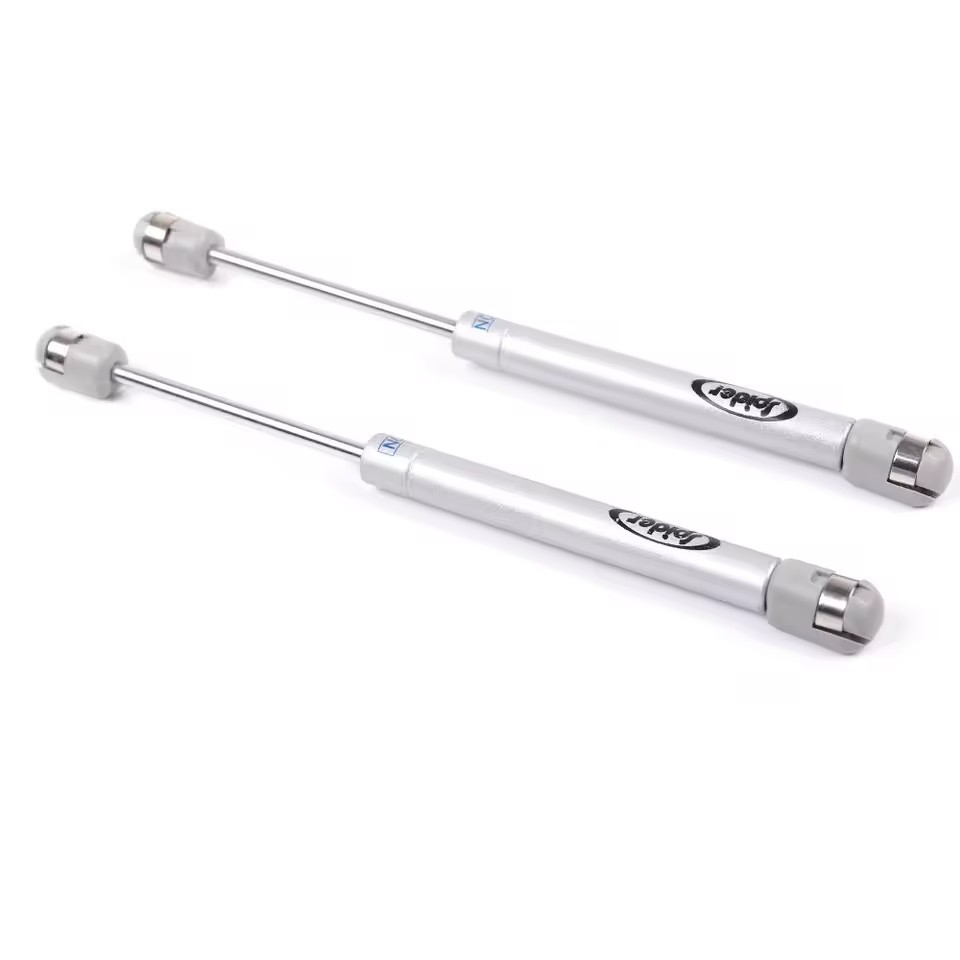
Pneumatic Gas Springs (Nitrogen Charged): These systems rely on high-purity inert nitrogen gas ($N_2$) compressed inside a micro-honed steel cylinder tube (typically 15mm–18mm diameter) paired with a hard-chrome-plated piston rod (6mm–8mm diameter). The force rating (measured in Newtons, universally standardizing at 50N, 80N, 100N, 120N, and 150N) is determined by the internal gauge pressure. As the flap door is lifted past a threshold initiation angle (approximately 15°–20°), the pressurized nitrogen expands against the piston orifice, driving a seamless, hands-free upward ascent. Integrated hydraulic fluid chambers at the distal cylinder boundary deliver dynamic damping deceleration over the final 10 degrees of travel, preventing jarring shocks to carcass top panels and dowel joints.
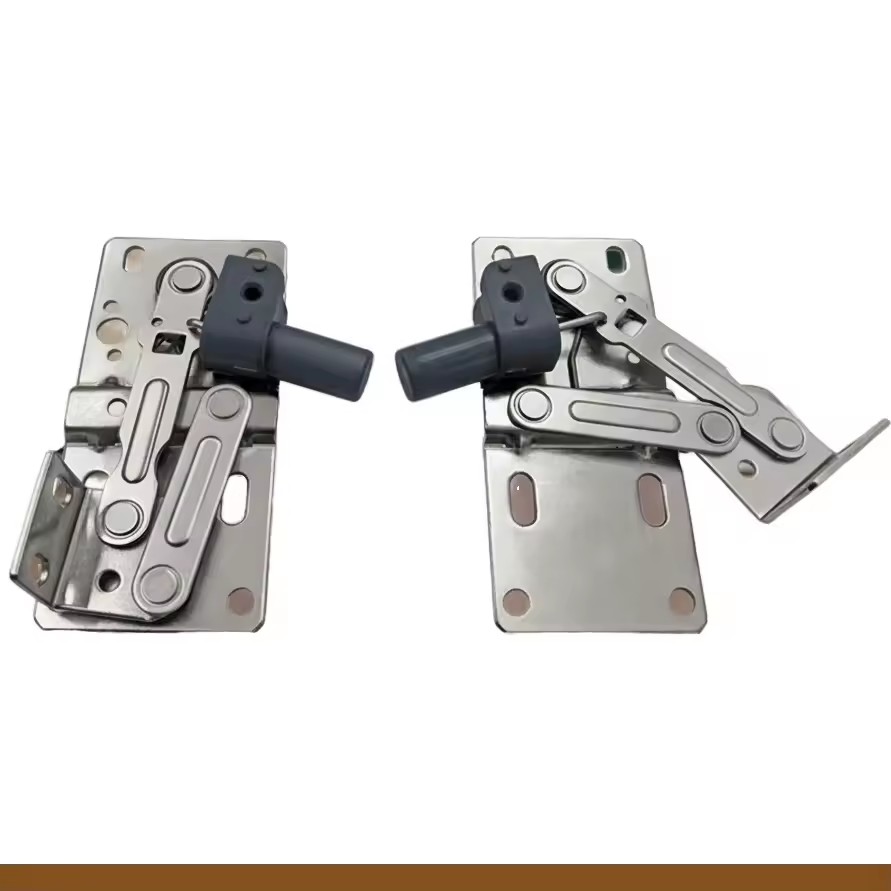
Mechanical Multi-Pivot Friction Stays: Utilizing high-tensile cold-rolled steel (SPCC) or zinc alloy die-cast linkages, friction stays employ internal spring-loaded conical or composite washer packs. Calibrated via an integrated hex micro-adjustment screw, these systems balance door weight precisely at any opening position—achieving the highly sought-after "Free-Stop" (multi-position hold) user experience. Unlike standard pneumatic struts, mechanical stays do not force the flap upward automatically; instead, they render the front door virtually weightless throughout its arc from 30° to 105°.
Mathematical Torque Formulation for B2B Hardware Specification
Specifying incorrect flap door stay ratings is the primary cause of field failures, carcass delamination, and end-user warranty disputes. Aviano Hardware's engineering department establishes procurement sizing through precise Newton-meter ($N\cdot m$) and Power Factor (PF) calculations. When calculating single-door or tandem flap stay setups, joinery specifiers must compute the maximum gravitational moment arm acting upon the pivot hinge line:
T (N·m) = [Door Height (m) / 2] × [Door Mass + 2 × Handle Mass (kg)] × 9.81 m/s²
Power Factor (PF) for Parallel Lift Mechanics:
Power Factor (PF) = Cabinet Height (mm) × Door Weight including Handle (kg)
Below is the empirical selection benchmark table adopted by Guangzhou Aviano Hardware for standard 18mm melamine-faced chipboard (MFC), MDF, and aluminum-framed glass flap assemblies:
| Door Height (mm) | Door Weight Range (kg) | Recommended Gas Spring Force (N) | Friction Stay Mechanical Torque (N·m) | Kinematic Opening Angle |
|---|---|---|---|---|
| 300 – 400 | 1.5 – 2.5 kg | 50N – 80N (Single/Pair) | 1.2 – 2.0 N·m | 90° – 100° |
| 400 – 500 | 2.5 – 4.2 kg | 80N – 100N (Pair recommended) | 2.0 – 3.8 N·m | 100° – 105° |
| 500 – 600 | 4.0 – 6.5 kg | 100N – 120N (Pair recommended) | 3.8 – 5.5 N·m | 105° – 110° |
| 600 – 750 | 6.0 – 9.5 kg | 120N – 150N (Tandem configuration) | 5.5 – 8.0 N·m | 105° Free-Stop |
| Bi-Fold Vertical Lift | 5.0 – 14.0 kg | Dual Synchronized Heavy Struts | Power Factor 1,800 – 4,200 | 107° Bi-Fold Clearance |
Seal Durability & Low Micro-Leakage
Constructed with dual-layer polyurethane/nitrile lip seals and micro-finished piston rods to ensure zero nitrogen leakage over 50,000+ continuous kinematic cycles.
Advanced Anti-Corrosion Surface Treat
Outer steel tubes are finished with industrial-grade electrostatic epoxy powder or cathodic electrophoretic deposition passing strict 96-hour neutral salt spray tests.
3D Micro-Adjustment Alignment
Our mounting brackets allow tool-free clip-on assembly with ±2mm depth, lateral, and vertical adjustments to align gaps perfectly on handleless flat cabinet panels.
Product Evolution & Future B2B Procurement Trends
How structural engineering shifts, ultra-slim concealed profiles, automated smart joinery, and global supply chain consolidation are reshaping commercial fittings.
Trend 1: Flush Recessed & Ultra-Slim Concealed Mechanics
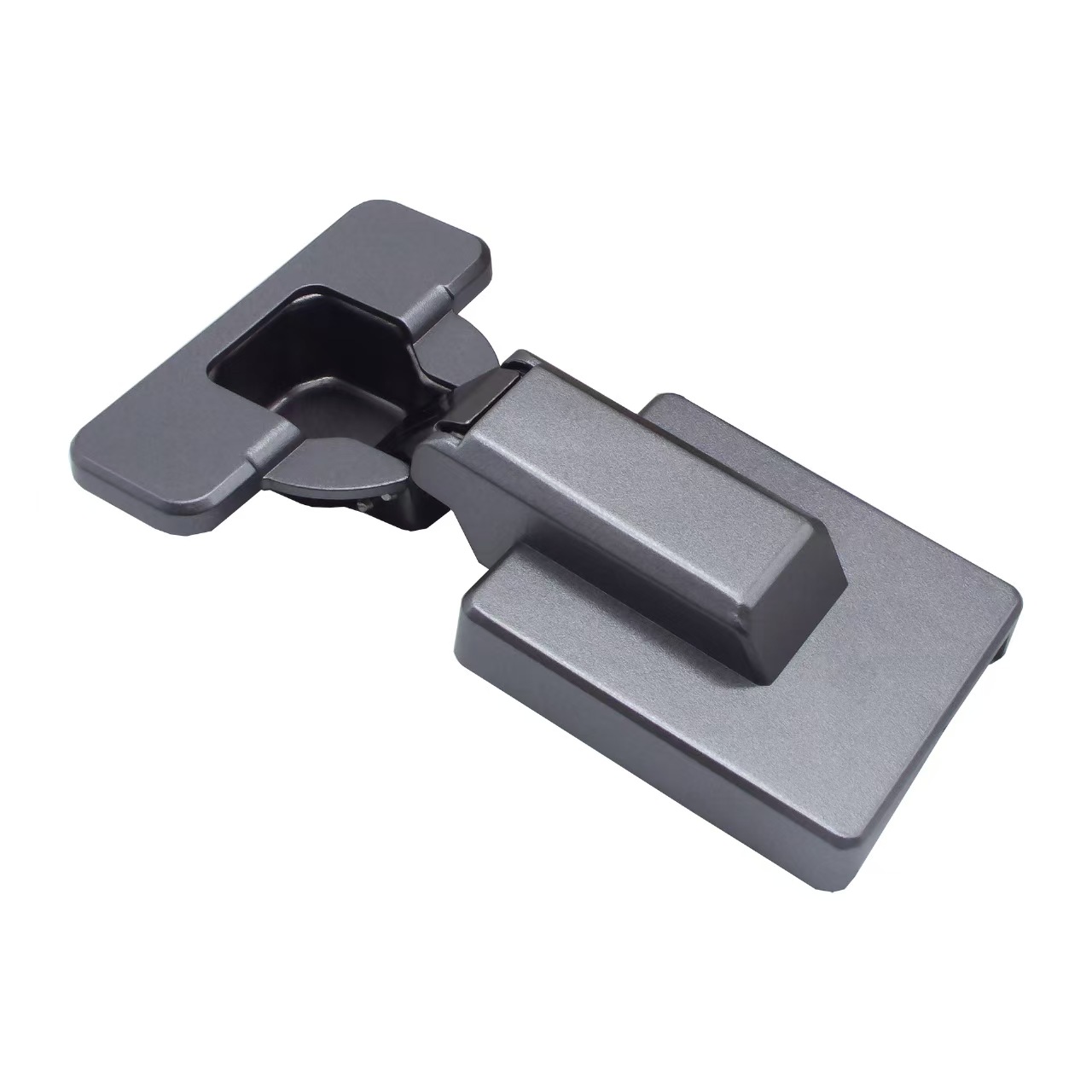
Architectural interior design is moving aggressively away from bulky gas cylinders that consume internal cabinet volume. Future procurement cycles (2025–2030) show soaring demand for ultra-thin stay mechanisms (thickness ≤ 12mm–14mm) that can be fully milled and recessed into the 18mm carcass side wall. This leaves 100% of the internal cabinet space unobstructed while delivering a pristine, hardware-invisible luxury aesthetic for high-end residential kitchen fitouts.
Trend 2: Integrated Push-to-Open with Damped Soft-Close
Handleless cabinetry remains the dominant global aesthetic. Traditional gas springs forced buyers to choose between push-latches (which often lacked sufficient mechanical throw to clear the strut's dead center) or manual pulls. Next-generation flap stays combine high-energy release triggers with integrated mechanical dampening: a single press ejects the flap upward silently, while manual pull-down triggers automatic soft-close buffering in the final closure phase.
Trend 3: Mixed-Container Guangdong Consolidation
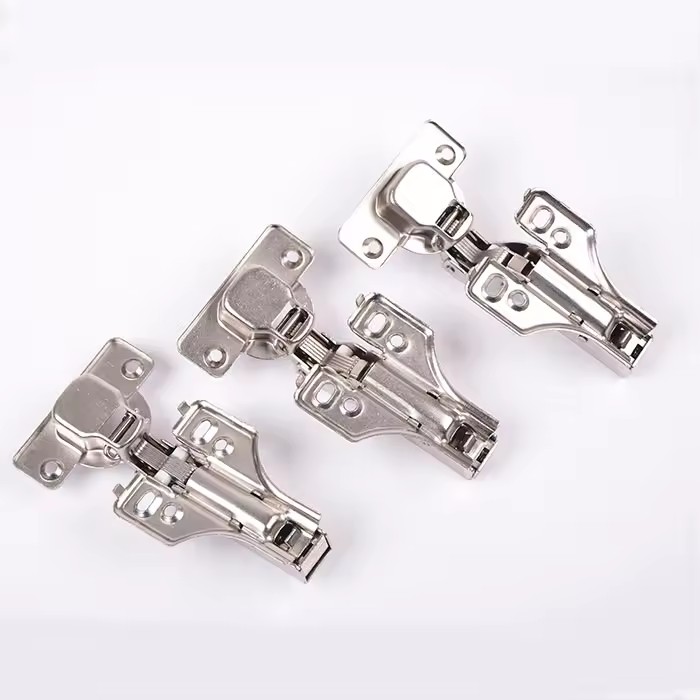
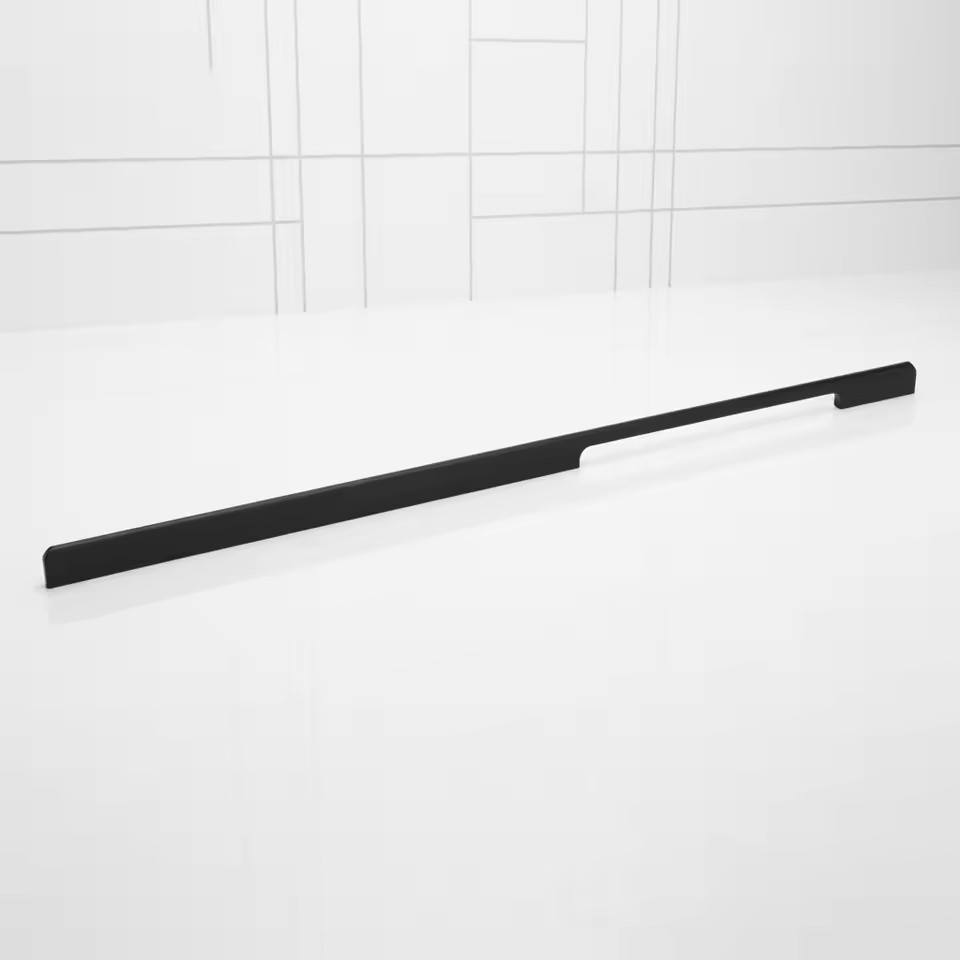
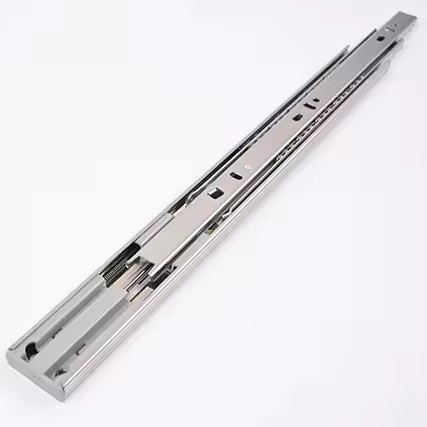
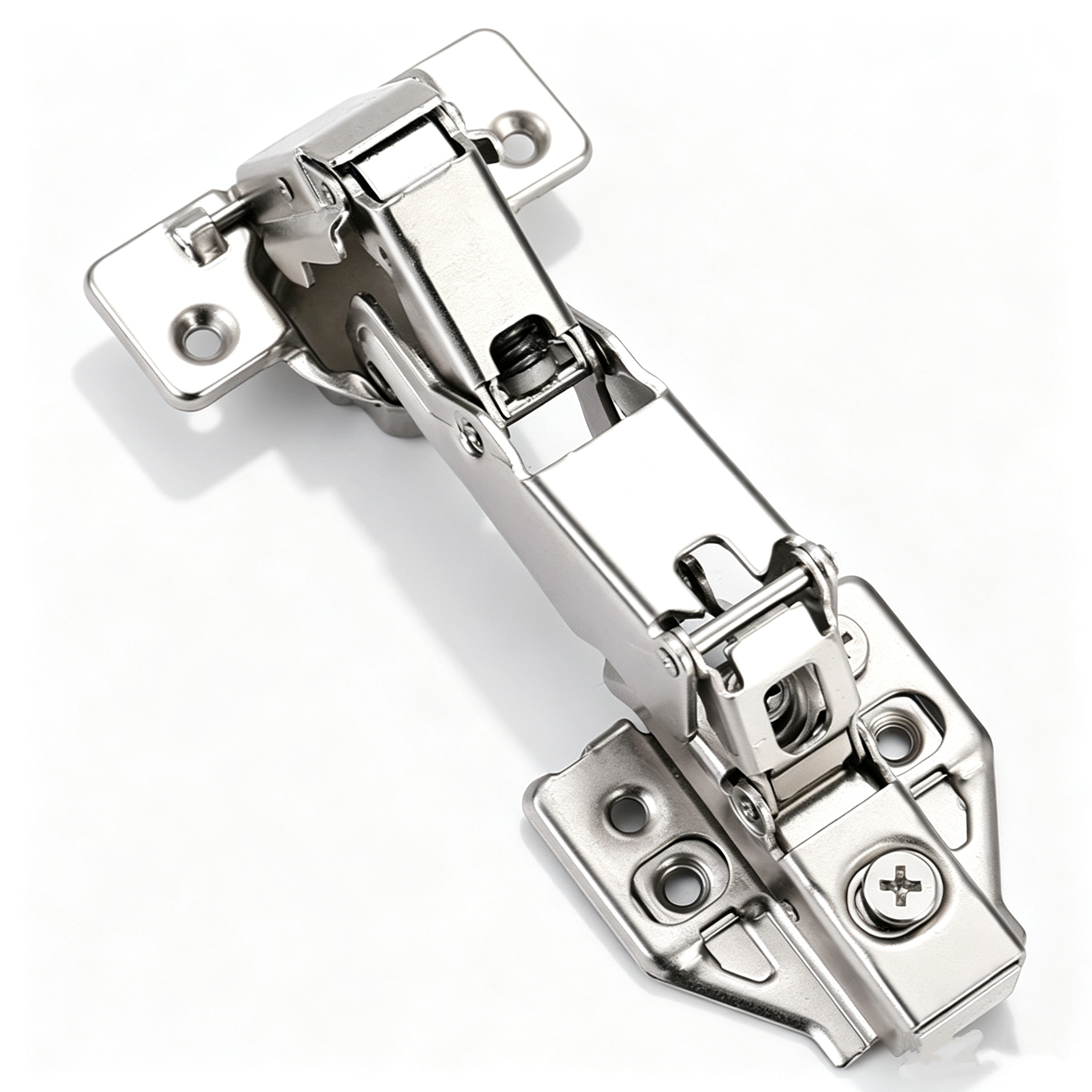
Global furniture manufacturers and hardware importers no longer procure flap stays in isolation. The modern procurement standard mandates sourcing full opening systems—matching gas springs, 3D hydraulic concealed hinges, full-extension undermount drawer slides, and architectural aluminum handles—from a unified engineering vendor. By consolidating multiple hardware SKUs into full 20GP/40HQ container shipments out of Guangzhou/Shenzhen ports, international buyers reduce landed freight costs by 18% to 26% and eliminate mismatched surface plating variations.
Trend 4: Eco-Compliant Surface Chemistry & Sustainable Metallurgy
With international regulations such as EU RoHS, REACH, and California Proposition 65 governing interior architectural components, tier-one flap stay factories are eliminating hexavalent chromium ($Cr^{6+}$) electroplating. The industry standard has shifted completely toward trivalent zinc chromating, water-based electrostatic paints, and recyclable POM polymer dampening cores, granting overseas commercial builders the compliance documentation needed for LEED-certified projects.
Why Choose Guangzhou Aviano Hardware Co., Ltd.
Established in 2011, Aviano Hardware serves cabinet makers, architectural joiners, and hardware importers across 30+ countries with robust OEM/ODM production and quality control.
Full OEM & ODM Customization
Laser etching, custom steel arm stamping, bespoke force ratings (30N to 200N), tailored stroke lengths, and private-label packaging with customized inner boxes and barcodes.
Multi-Tier Quality Control
Every batch undergoes automated pneumatic force calibration, kinematic cycle endurance validation (80,000 cycles), and 96-hour neutral salt spray anti-corrosion testing.
Strategic Consolidation Hub
Situated in Guangzhou's hardware logistics nexus, we consolidate hinges, drawer slides, flap stays, and handles under FOB, CIF, or EXW terms, minimizing logistics overhead.
Rapid B2B Engineering Support
With an average inquiry response time under 2 hours and an international reorder rate exceeding 33%, our export team provides CAD drawings, mounting specs, and swift sampling.
Frequently Asked Questions for Importers & Specifiers
Detailed answers addressing engineering tolerances, manufacturing minimums, container logistics, and quality assurance.
What is the standard minimum order quantity (MOQ) for custom-branded flap stays and gas springs? +
For standard off-the-shelf catalog models (such as our 50N to 150N silver/black hydraulic gas struts), our trial MOQ starts at 500 to 1,000 pieces per rating. For custom OEM branding—which includes permanent laser-etched client logos on the cylinder tube, customized bracket stampings, specific Newton force configurations (e.g., non-standard 70N or 130N), and private-label retail color boxes—the standard production MOQ is 3,000 pieces per specification. We actively accommodate mixed-item container programs where multiple hardware lines (such as concealed cabinet hinges, drawer slides, and handles) are consolidated into a single shipment to satisfy overall volume criteria.
How do you calculate whether a flap door requires one gas strut or a synchronized tandem pair? +
While a single high-force gas strut (e.g., 120N or 150N) possesses sufficient lifting torque to elevate a cabinet door weighing 4.0 kg to 5.5 kg, using a single stay on wide doors introduces structural torsion. As a general joinery rule: any cabinet door with a width exceeding 600mm must employ a synchronized pair of flap stays, placed symmetrically on the left and right gable panels. Installing a single stay on wide fronts causes asymmetric lateral torque, resulting in hinge twist, door sagging, uneven reveal margins (±3mm skew), and premature failure of the top pivot hinges. When utilizing a pair, divide the total calculated Newton requirement by two (e.g., a total required force of 160N is satisfied by two 80N struts).
What testing standards and certifications apply to Aviano flap stays and gas springs? +
Our flap stay systems conform to international architectural hardware standards, including EN 15828 (Hardware for furniture - Strength and durability of hinges and their components - Stays and lift-up systems) and ANSI/BIFMA X5.5 for commercial storage units. Production samples undergo rigorous automated testing: 50,000 to 80,000 open-and-close dynamic endurance cycles under full rated torque loads, ensuring no piston rod score marks, seal blowouts, or force depreciation exceeding 10%. Surface finish corrosion resistance is validated via ASTM B117 neutral salt spray testing, achieving a minimum of 96 hours without red rust on electroplated brackets and painted cylinder tubes.
Can gas spring flap stays be installed upside-down? What is the correct orientation? +
Correct orientation is critical to longevity and functionality. Flap door gas springs must always be installed with the wider cylinder tube mounted to the cabinet carcass gable panel (or upper pivot) and the chrome piston rod pointing downward toward the door mount bracket when the cabinet door is closed. This rod-down orientation ensures that the internal lubricating hydraulic oil continuously bathes the rod packing seal, preventing rubber dry-out, hardening, and micro-leakage of nitrogen gas. Furthermore, it ensures that the hydraulic damping fluid is correctly positioned to provide smooth end-cushioning deceleration when the door reaches its maximum open angle.
What payment mechanisms and international incoterms do you support for overseas shipments? +
Guangzhou Aviano Hardware supports comprehensive international trade modalities. Standard incoterms include FOB (Guangzhou, Huangpu, Shenzhen, or Nansha ports), CIF (to any major global commercial destination port), and EXW (for clients consolidating with other Chinese factories). Our accepted payment instruments include Telegraphic Transfer (T/T with standard 30% advance deposit and 70% against Bill of Lading copy), Irrevocable Letters of Credit at sight (L/C), D/P, and secure payment facilities for sample tooling fees. We regularly handle documentation in USD, EUR, and CNY to mitigate foreign exchange volatility for long-term contract accounts.
How do your flap stay solutions accommodate modern aluminum framed glass doors? +
Standard wooden door mounting plates rely on twin or four-hole countersunk wood screws that cannot be installed into slim aluminum door frames (typically 19mm to 45mm profile width). Aviano provides specialized aluminum-frame mounting adaptors engineered with precision zinc-alloy die castings or stamped high-strength steel. These adaptors mount directly into the rear channel of the aluminum profile using set screws or sliding M4 channel nuts, providing a rigid, rattle-free mechanical anchor that avoids glass edge drilling and preserves the integrity of modern display cabinets.
Ready to Optimize Your Hardware Procurement Supply Chain?
Contact Aviano's Guangzhou engineering team to discuss customized force calculations, request certified OEM/ODM sample kits, or consolidate your next container of concealed hinges, drawer slides, and flap stays.